
龙的天空
From community renewal to sustainable transit: two Latin American scholars draw on the people-centered planning embedded in China’s urban development_我的网站

一 | 编者按 工业和信息化部、中央网信办等部门近日联合印发的《关于推动互联网基础资源高质量发展的指导意见》提出,到2035年,我国成为全球互联网基础领域重要创新策源地和引领者。
Editor's Note:
Chinese President Xi Jinping has pointed out, "to understand China today, one must learn to understand the Communist Party of China (CPC)." With the rapid development of China's economy and society, and the steady advancement of the Chinese path to modernization, the notable achievements of the CPC have drawn extensive international attention and scholarly interest. Against this backdrop, the Global Times has launched the "CPC in Global Eyes" column, focusing on the feelings, perspectives and insights of international friends from various fields regarding the CPC's historical path and achievements.
They include those who have toured China, who deeply study the CPC in academic fields, who work, live, study, seek employment or do business in various fields in China, and who pay close attention to the CPC's policies and trends, although they haven't visited the country in person. Through their vivid personal experiences, we aim to present a multifaceted overseas view of the CPC.
In the 16th installment of this series, we followed two Latin American scholars as they toured Chinese cities, witnessing how the CPC's people-centered, long-term development vision is translated into tangible everyday improvements - and reflecting on what China's experience might offer for state capacity building in Latin America.
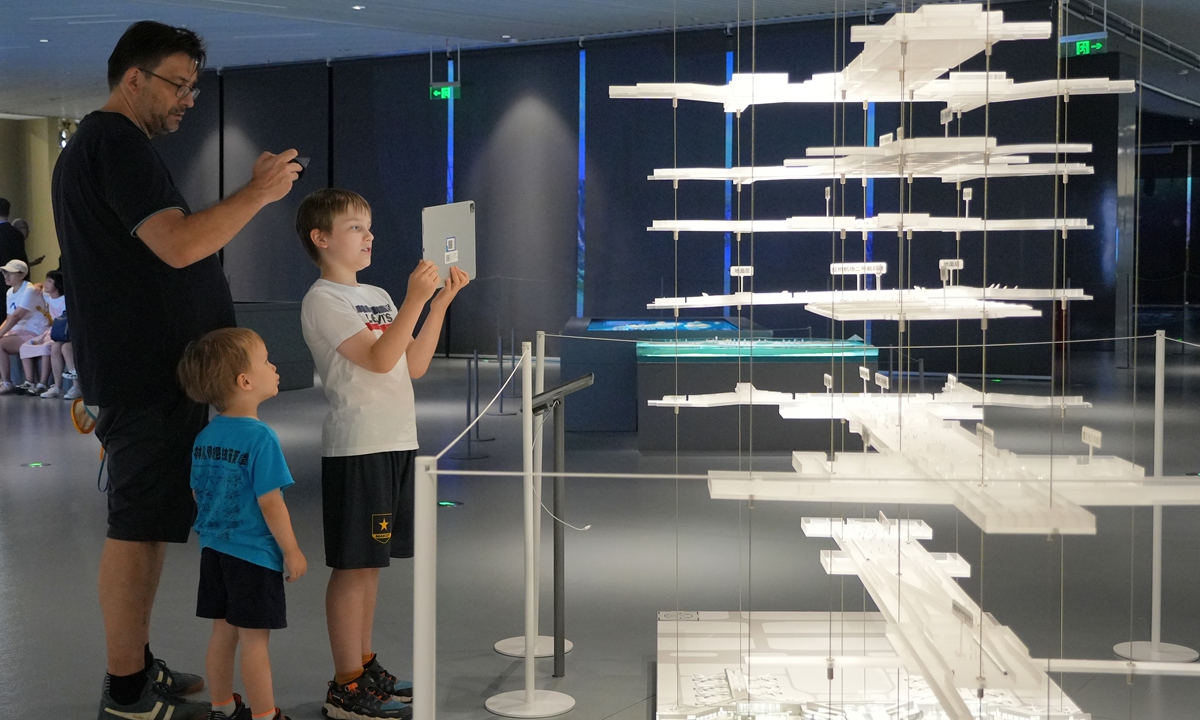
Standing before the glass at the Shanghai Urban Planning Exhibition Center, Ecuadorian scholar María Imelda Robalino gently traced the edge of the giant city model with her fingertips, her eyes reflecting the orderly contours of this megacity stretching toward the horizon. The clear lines linking green spaces along the city's iconic Huangpu River, dense residential neighborhoods and industrial parks drew the public administration scholar, who has long studied urban expansion in Latin America, into deep thought.
Beside her, Mariana Escalante, a Mexican scholar in China studies, gazed at the scrolling timeline of Shanghai's long-term urban plans on a screen and expressed her admiration for the CPC and the Chinese government's all-out efforts in development and construction. "It's very impressive that they're taking care of all the factors that influence Chinese people, not just development and the economy, but also the environment and the well-being of the people," she told the Global Times at the exhibition center.
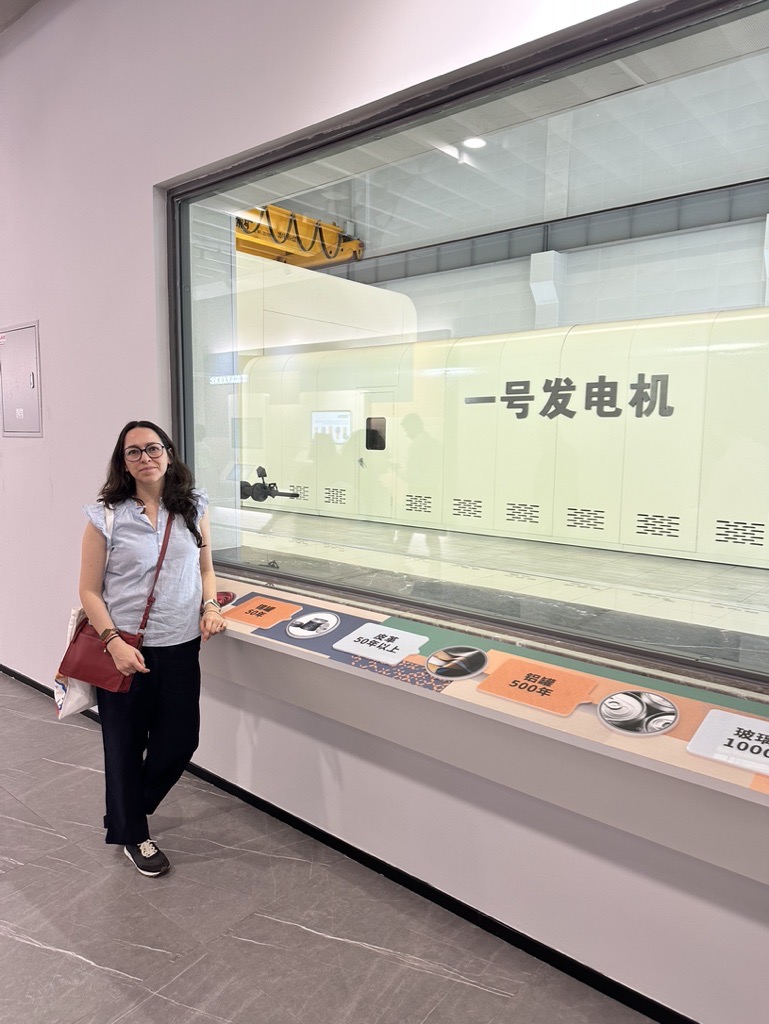
In June, a delegation of more than 20 think tank scholars from about 15 Latin American countries, including Argentina, Brazil, Mexico and Ecuador, started their tour in China. Over the course of more than 10 days, they visited cities including Beijing, Shanghai and Nanjing, and went into urban planning exhibition centers, residential communities, Party schools, eco-friendly power plants and university think tanks. Robalino and Escalante were among them. Like many others in the group, they came with a shared purpose: to see for themselves what Chinese modernization under CPC leadership actually looks like.
"I always emphasize the importance of seeing and experiencing China with my own eyes, in addition to learning about it through documents, academic research or news reports," Escalante told the Global Times.
From plans to everyday life
For Escalante, this trip to China was far from her first encounter with the country.
A professor at the National Autonomous University of Mexico and founder of Mexican Association of Sinology, she has visited China many times before - yet each journey still brings fresh discoveries. "China is a country that changes at an impressive speed, so I try to visit as often as possible," she told the Global Times. "Every trip allows me to observe new processes, and compare what I study in texts with how policies are implemented."
Robalino approached her China visit with a broader set of expectations. Her institution, Ecuador's National Institute of Advanced Studies, has a Center for Chinese Studies, and this trip was meant to deepen existing academic ties. As a scholar of public policy and innovation, she also hoped to observe firsthand how China builds state capacity.
With different expectations, the delegation set off on a "dialogue" spanning mountains and seas. In Shanghai, the Latin American scholars visited the city's urban planning exhibition center and also stepped into one of its most local residential communities. If the former showed them how a metropolis is "planned" into being, the field visit to Block 228 Changbai New Village Subdistrict, or Changbai 228, revealed how planning is translated into everyday life - through the leadership and support of CPC organizations at every level.
On an afternoon in early June, the delegation stepped into Changbai 228 in Shanghai's Yangpu district. Since its completion in 1952, it has served as a warm home for the city's industrial workers. More than seven decades later, through urban planning, it has been transformed into a mixed-use community that preserves historical memory while offering modern services.
As the delegation walked through the neighborhood, they passed one amenity after another: a convenience commercial center, an affordable sports and health center, a restaurant, and subsidized rental housing. Inside a local Party-mass service center, some residents were dancing, while music drifted out into the hall. At the entrance, several scholars paused and, unable to resist, began clapping along to the beat.
"From the Shanghai Urban Planning Exhibition Center, I was able to observe how the state plans and envisions the development of the city; at Changbai 228, I was able to observe the results of that action from the perspective of the community and everyday life," Robalino told the Global Times. What intrigued her most was "how a planned intervention can become a space that does not feel rigid or imposed, but instead becomes a place for connection and coexistence." To her, the case revealed one of the less visible dimensions of public action: what happens after planning, during implementation, when public decisions become part of people's daily lives.
Escalante was equally struck by what Changbai 228 revealed about the CPC's people-centered philosophy. "What attracted my attention most at 228 was the close connection between urban renewal and the everyday well-being of residents," she said.
"Urban space should not be organized solely around commercial consumption. Changbai 228 includes commercial services, but it also has public and community spaces where people can meet, rest or take part in activities, without consumption necessarily being at the center of the experience." In Escalante's view, the CPC's people-centered approach had taken on tangible form. "Development should not be understood only in economic terms or in terms of economic gain, but also in terms of the people."

An immersive understanding
Having visited China in person and seen firsthand how CPC policies are implemented in everyday life and put at the service of the people, these Latin American scholars with a strong interest in China gained a more immersive understanding of some of the Party's core concepts.
Several of the projects the scholars visited enabled them to observe how these concepts are translated into concrete policies and projects, Escalante said. She pointed to some terms often mentioned by the CPC and the Chinese government, such as "people-centered development," "common prosperity" and "Chinese modernization."
"People-centered development" means that development should not be measured solely by economic growth, infrastructure construction or technological progress, but also by its ability to improve people's livelihoods and quality of life, she added.
The scholar further pointed out that, "common prosperity" adds another layer to this vision: growth and modernization should benefit a broader swath of society, and development should help reduce social and regional inequalities. "What is the point of achieving high levels of economic growth or technological development if a significant part of the population is left outside its benefits?"
As for "Chinese modernization," Escalante described it as a modernization path suited to China's own historical, social and political conditions, rather than the assumption that there is only one universal model to follow.
"The leadership of the CPC is also explicitly presented as one of its central elements. From my perspective, the role of the Party is precisely one of the defining features of this process," she told the Global Times. "The Chinese government has considerable capacity to set long-term development goals, coordinate public policies and mobilize resources toward specific priorities. What interests me is how these broad ideas are translated - or are intended to be translated - into concrete policies, and what results they produce at different levels of society."
Cooperation amid challenges
This year marks the 10th anniversary of the launch of the China-Community of Latin American and Caribbean States (CELAC) Forum. Data show that in 2024 trade between China and Latin American and Caribbean countries exceeded $500 billion for the first time, more than 40 times that of the beginning of this century. In 2025, the figure climbed further to $549 billion. More than 20 Latin American countries had joined the Belt and Road cooperation framework, the Xinhua News Agency reported in May 2025.
Behind the numbers are scholars' observations and reflections. Escalante believes that one of the most practical and promising areas for cooperation between China and Latin America lies in sustainable urban transportation and its integration with new energy - including electric public transit, charging infrastructure, energy storage technologies, smart traffic management systems and shared mobility services. "These are particularly relevant areas for large Latin American cities that face problems such as congestion, pollution, unequal access to transportation and long commuting times," she said.
From the perspective of public administration, Robalino pointed to at least two areas where China and Latin America could find concrete opportunities for South-South cooperation.
"One is the exchange of experience on long-term planning, policy monitoring and strengthening implementation capacity; the other is public innovation," she told the Global Times. "It would be particularly interesting to exchange methodologies for experimentation, institutional learning and scaling up innovations."
When asked about the resurgence of "Monroe Doctrine" thinking in the US, Escalante did not evade the issue. "US influence and pressure on Latin America have a long history," she said. What worries her now, she added, is that the US government has once again publicly invoked the Monroe Doctrine, "which inevitably raises questions in Latin America about sovereignty and the capacity to make our own decisions."
At the same time, Escalante argued that it is too simplistic to explain Latin America's limited autonomy solely through external pressure. "Autonomy also depends on our own capacities. A country with strong institutions, a more diversified economy, lower levels of poverty and inequality, greater scientific and technological capabilities, and a long-term development strategy also has more room to decide with whom it wants to build relations and on what terms," she said.
Looking at Latin America, Escalante said one of the most important lessons from China's experience is the country's ability to define long-term goals and, above all, to translate them into concrete policies.
"Our countries have very different political systems, histories and social conditions, so this is not about copying the Chinese model," she told the Global Times. "However, we can reflect on the importance of building institutional systems that can plan, coordinate policies, ensure a certain degree of continuity and make public decisions truly take effect."
As the scholar put it, "China's experience can prompt Latin America to ask an important question: how do we build states with enough capacity to turn development goals into concrete and lasting improvements in people's lives?"
。针对当前国内互联网基础资源高质量发展面临的挑战,本报聚焦智能体互联网络基础设施建设、韧性域名系统体系化构建这两大关键议题,深入剖析行业痛点,探寻破局路径。

二 | “帮我看一下手机日历中的出差计划,根据行程订好机票、出租车,再安排一下用餐。”执行用户发送给AI助手的这样一句指令,离不开多个跨平台智能体的协同合作。

三 | 当前,智能体互联互通水平快速提升,正推动智能体技术从单点应用向网络化协同发展跃升。 不久前印发的《关于推动互联网基础资源高质量发展的指导意见》提出,探索构建具备统一通信协议、数据交互标准和接口规范的智能体互联网络基础设施。作为AI时代最具变革性的技术形态之一,智能体的互信、互联、互操作水平正深刻影响着AI技术的落地效果与产业价值释放。

四 | 然而,构建智能体互联网络仍面临多重现实障碍。让不同智能体一起干活,究竟难在哪儿? 互联要闯“五道关” “单体智能解决的是‘一个智能体会不会做事’,智能体互联网解决的是‘不同智能体能不能一起把事做成’。”中国信息通信研究院(以下简称“中国信通院”)工业互联网与物联网研究所互联网研究部主任李炳奇告诉记者,当前,AI正从回答问题、生成内容,进一步走向理解目标、调用工具和执行任务。但单个智能体再强,也会受到知识、数据、工具和权限边界的限制,智能体数量的增加,并不会自然形成群体智能。

五 | 面向企业经营、产业链协同、城市治理等复杂任务,需要不同平台、不同组织的专业智能体能够相互发现、确认身份、调用能力并协同执行。 要实现这一目标,首先要解决智能体之间“找不到、认不准、连不通、协同难、责任不清”的问题,从而构建开放、可信、可治理的网络基础设施。

六 | “智能体互联网就是让分散的智能能力能够按需组合,推动AI从单点应用迈向网络化协同。”李炳奇说。 前景虽广,但智能体互联网建设并不是简单地把现有接口再封装一遍,而是要建立一套面向自主智能主体的网络机制。 李炳奇认为,在技术方面,智能体互联网发展壮大至少要闯“五道关”。第一是“身份关”,要解决智能体是谁、属于谁、具有什么权限等问题,为每个智能体建立唯一标识、可信认证和动态授权机制。第二是“发现关”,要用机器可理解的方式描述智能体的能力、输入输出和服务条件,让智能体能够根据任务找到合适的合作对象。第三是“互通关”,要解决不同模型、框架和平台之间协议及语义不一致的问题,统一任务表达、状态管理和上下文传递。第四是“协同关”,要支持任务拆解、能力编排、过程反馈、异常处理和服务质量保障。第五是“安全关”,要把最小权限、加密传输、运行隔离、行为审计、风险监测和责任追溯嵌入全过程,最终实现能力可发现、身份可认证、任务可协同、行为可管控、责任可追溯,并且在海量智能体接入的情况下仍然可靠、稳定、可扩展。

七 | 目前,中国信通院正联合产业各方,围绕总体架构、身份标识、能力发现、互联协议和安全治理等开展研究,推进标准研制、试验验证和国际交流。其中,中国信通院子公司北京泰尔英福科技有限公司正围绕身份、注册、发现、互联、安全五大环节,积极参与各类产品设计与技术验证工作,在分布式数字身份、智能体标识注册、能力发现匹配、跨域可信互联和分层安全治理等方面打通关键链路,推动不同平台智能体实现互认互通。 技术标准有待统一 尽管当下绝大多数智能体均具备调用外部工具、对接业务系统的接口能力,但实现跨厂商、跨领域、跨技术栈的智能体互联,仍面临多重瓶颈。 就底层技术标准而言,当前行业内A2A、MCP、ANP、AIP等多种交互协议并行探索,异构智能体底层技术栈、语义表达体系各不相同,缺乏有全行业共识的统一通信规范与语义对齐机制。大量智能体处于“各自为战”的孤岛状态,即便能连上外部系统,也难以与其他生态的智能体开展稳定、高效的自主协作,跨生态适配成本居高不下。

八 | 李炳奇说,目前,智能体互联仍处在标准形成期,企业协议、开源项目和国际标准同时存在。

九 | 例如,从产业侧看,MCP主要解决智能体与数据、工具和外部系统的连接,A2A主要解决智能体之间的发现、通信和任务协作,两者具有较强互补性。

十 | A2A已由Linux基金会托管并发布1.0稳定版本,MCP也已纳入Linux基金会旗下的Agentic AI Foundation,这说明相关协议正在从企业主导的技术方案,逐步走向开放、社区化和相对中立的治理模式。 从国际标准组织看,互联网工程任务组(IETF)已围绕智能体发现与调用、身份管理、任务协同和跨域互操作等形成一批互联网草案;全球移动通信标准制定国际组织第三代合作伙伴计划(3GPP)也开始从6G体系角度研究智能体的注册、发现、鉴权和通信。但值得注意的是,相关互联网草案仍属于“工作中的提案”,尚不等同于正式国际标准。

十一 | “总体来看,当前技术路线和协议仍较为分散,跨平台互操作所需要的身份、发现、寻址和信任等公共层能力还不完善。”李炳奇说,此外,智能体具有较强的自主性,对错误调用、权限越界、数据泄露和责任认定等问题,需要建立不同于传统软件的新型治理机制。同时,测试评估、服务质量、成本结算和生态运营模式也尚未成熟。 落地场景仍需沉淀 找到应用场景是推动智能体互联网进一步壮大的关键。当前,对于智能体互联网的场景挖掘尚显不足,需要多智能体相互协作,尤其是跨平台协作的刚需场景较少。大多数场景仍停留在单体智能体或企业内部编排层面,真正跨组织协同、能够形成明确投入产出比的场景还不够多。 “智能体互联网的发展需要兼顾技术攻关和场景落地两方面。”北京泰尔英福科技有限公司智能体创新部副总监胡嘉明认为,智能体作为自主性更强、风险更高的新型网络交互载体,应当有身份安全、互联安全的制度保障。同时,要充分发挥我国丰富的应用场景潜力,加速探索智能体互联网赋能产业的新场景、新服务、新模式,通过场景验证和市场筛选,让可复制、可持续的智能体互联网应用场景逐步沉淀。 胡嘉明介绍,以智能体互联网示范网络为工作基础,北京泰尔英福科技有限公司研发了可支持多智能体协作的智能体工厂、智能体公共服务平台、供应链协同平台和产业供需对接平台,在智能体编排调度、政务民生服务接入、上下游跨组织协同和企业供需智能匹配等场景开展试点验证、产业服务。 “既不能等到所有标准完全成熟后再行动,也不能在标准缺位的情况下盲目铺开。”李炳奇建议,应坚持“标准先行、场景牵引、试验验证、治理同步、开放合作”理念,先建设试验网络,构建身份、发现、互联等公共能力,再选择制造、商贸、政务等高价值场景开展小切口、深流程验证;同时完善检测认证、审计溯源和风险处置机制,积极参与国际标准和开源生态建设,逐步形成开放互联、可信可控、可持续运营的智能体互联网产业生态。 (科技日报 本报记者 都 芃) 【编辑:刘欢】。
Current article:http://pab5.taokenlaichunlei.bond/list_3jq1f/q3b7u.html
Published on:17:42:02
栏目相关
- 宏碁非凡 Go Air 轻薄本发售:酷睿 5 320 + 12GB + 512GB,国补后 4249.15 元
- 缺锂怎么办?马斯克式解决方案:特斯拉自己干
- 江西省福彩年中业务培训在南昌召开
- 马刺新赛季迎赛程利好 94个休息日并列联盟最多
- iOS 16.1候选版本发布:引入iCloud共享照片图库 实时活动支持第三方App
- 恒通股份:上半年归母净利润1.84亿元,同比增长85.49%
- Token工厂、世界模型、AI手机,WAIC的三大新风向
- 世界女排联赛总决赛八强产生 中国队将遭遇意大利
- 马宁回家乡阜新参加公益活动,勉励学子:热爱足球 享受快乐
- 齐诵团・二十四节气特辑|处暑
- 曼晚盘点曼联伤情:6人受伤2人赛季报销,阿玛德5月回归
- 恒指午间休盘涨0.68%,恒生科技指数涨1.58%
热门排行
- 福州地表水保护治理项目获中央补助
- NY株、反落
- AMD Radeon VII“三个燃气灶”将在CES:Alien Area-51上被携带
- 科尔维尔:下半场完全不同,我们需要每场比赛开始都拿出这种表现
- 拼多多今年的核心玩法
- Olympic champion Wu Dajing appointed China short track head coach
- 省城闲置公车开到乡镇“上岗”,山东过好“车轮上”的紧日子
- 中方:当前斯威士兰安全形势复杂,电诈网赌犯罪活动猖獗
- 【透视社·绿色发展】生物多样性保护在行动
- 白狼山下豆香浓
- 巴黎奥运会倒计时两周年:浪漫过后,更需应对现实挑战
- 五輪に2.5時間…映りまくる日本企業のロゴが話題 金メダル争いで「存在感よ」「宣伝効果爆上げ」